
Description
A Companion Resource to Scamademic – How Scammers Target Authors and —and How to Fight Back https://authorsagainstscammers.org/scamademic/

#image_title
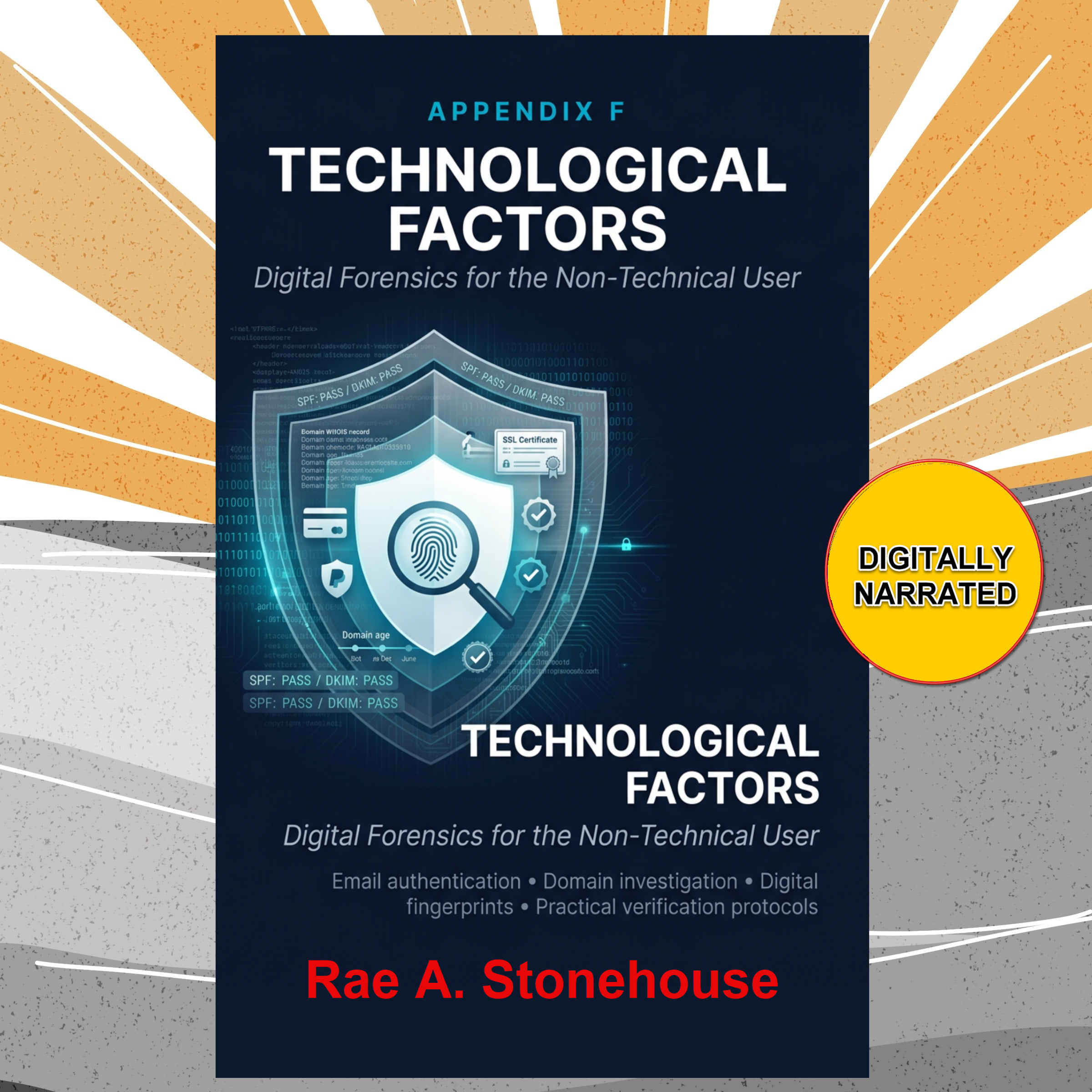
Technology isn’t neutral in the war against publishing scams—it’s both the weapon scammers use to defraud authors at industrial scale and the shield that exposes them through digital forensics. While predators exploit email spoofing, fake domains, deepfake videos, and payment platforms designed for irreversible theft, this essential companion guide to Scamademic: How Scammers Target Authors—and How to Fight Back transforms you into a human fraud detector through technical verification tools that work alongside psychological awareness. Written by Rae A. Stonehouse, founder of AuthorsAgainstScammers.org and scam survivor who lost $2,180 to the “Nancy Catherine” operation before recovering 100% through forensic documentation, this free resource teaches the 90-second email header analysis that exposed a fake “Toronto marketing agency” operating from Lagos, Nigeria, the domain age verification that reveals “established publishers” registered three days ago, and the payment platform hierarchy showing why Payoneer enabled zero recovery while Visa chargebacks returned every stolen dollar.
Learn to analyze what scammers can’t fake: email authentication protocols (SPF/DKIM/DMARC) that prove spoofing, WHOIS records revealing domain registration histories, reverse image searches exposing stolen profile photos, deepfake detection through visual artifacts and real-time verification requests, and the cross-platform digital footprint analysis that distinguishes legitimate professionals from fabricated personas created in a single afternoon. This technical companion provides the objective verification layer—complete with step-by-step forensic checklists, tool recommendations (MxToolbox, Google Admin Toolbox, TinEye), and the critical insight that while psychological red flags require interpretation, technical evidence either authenticates or exposes fraud with courtroom-admissible precision. Part of the Scamademic Companion Series, this guide exists because basic verification stops 90% of scams in under 10 seconds once you recognize that headers don’t lie, registrations can’t be faked, and metadata reveals what polished websites and flattering messages conceal.




Reviews
There are no reviews yet.